
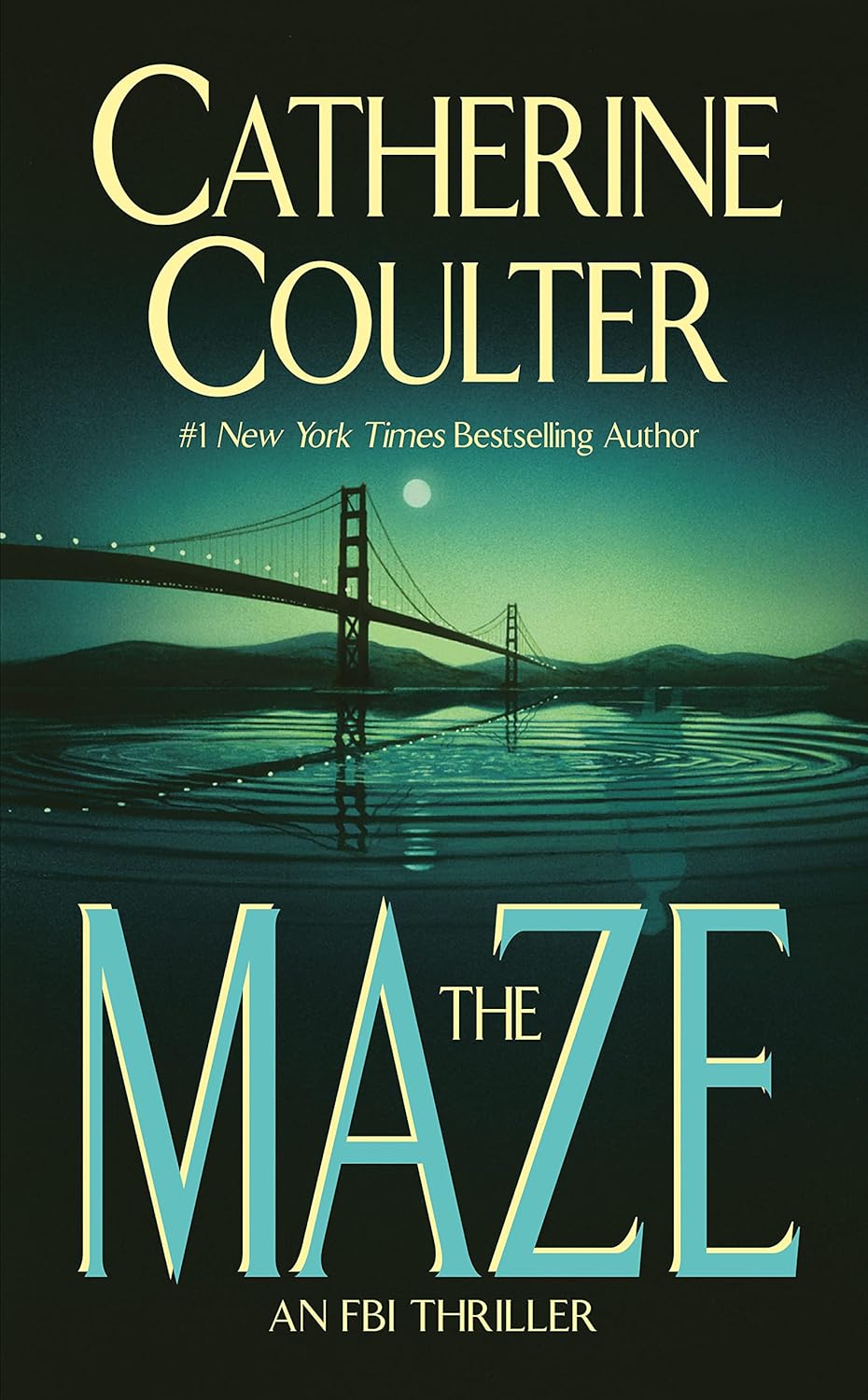
Long-running thriller series inspire a unique mix of comfort and skepticism. Readers know what they’re signing up for—familiar characters, recognizable stakes, and a proven narrative rhythm—but they also risk encountering stories that feel repetitive or dated. This concern is especially common with crime and FBI thrillers from the 1990s, an era defined by landlines, early computers, and pre-digital investigations.
So where does Catherine Coulter’s The Maze fit into the modern thriller landscape?
First published in 1997, The Maze is the second novel in Coulter’s FBI Thriller series, a franchise that has since grown into one of the longest-running in the genre. While The Cove laid the groundwork, The Maze is widely regarded as the book where the series truly comes alive—introducing readers to the emotional and psychological dynamics that would define Dillon Savich and Lacey Sherlock for decades.
This in-depth review explores whether The Maze still holds up today, examining its characters, themes, pacing, and place within both the series and the broader FBI thriller genre.
Book Overview (Spoiler-Free)
The Maze centers on Lacey Sherlock, a brilliant but emotionally scarred FBI trainee whose life was permanently altered seven years earlier when her sister was murdered by a serial killer known as the “Star-Slayer.” The case went cold, the killer vanished, and the trauma remained unresolved.
Now an elite graduate of Quantico, Sherlock is assigned to work under Dillon Savich, the head of the FBI’s Criminal Apprehension Unit. When new information suggests that the Star-Slayer may still be active—or that his crimes were never truly finished—Sherlock is drawn into a dangerous investigation that blurs the line between professional duty and personal obsession.
Running parallel to this central storyline is a secondary case involving a federal judge under threat. This dual narrative structure keeps the novel in constant motion while reinforcing the theme that danger often wears multiple faces.
Trauma as the Driving Force of the Story
What immediately distinguishes The Maze from many FBI thrillers is its treatment of trauma. Coulter does not use Sherlock’s past as a convenient justification for toughness or moral clarity. Instead, trauma is portrayed as unfinished business—a wound that has shaped Sherlock’s identity rather than strengthened it.
Sherlock didn’t join the FBI to “make a difference” in the abstract sense. She joined because her life stalled the moment her sister was murdered. Her career is not a calling; it is a coping mechanism.
This unresolved grief fuels the novel’s emotional tension. Sherlock is not chasing a killer simply to stop him—she is chasing closure, meaning, and a sense of control that was stolen from her years earlier. Coulter allows this obsession to feel uncomfortable, even dangerous, which adds psychological weight to the narrative.
Lacey Sherlock: A Refreshingly Vulnerable Protagonist
Lacey Sherlock stands out because she is allowed to be both exceptional and fragile. She is intelligent, highly trained, and perceptive—but she is also impulsive, emotionally raw, and occasionally blinded by her own certainty.
In contrast to many modern thrillers that favor nearly invincible “girlboss” protagonists, Sherlock feels deeply human. Her fear is not weakness; it is evidence of stakes that matter.
Coulter resists the temptation to turn Sherlock into a revenge fantasy. Sherlock doesn’t want vengeance—she wants resolution. That distinction gives the character emotional credibility and prevents the story from slipping into melodrama.
Readers who search for “Lacey Sherlock character analysis” or “strong female FBI protagonist” will find a character whose strength lies not in perfection, but in resilience.
Dillon Savich and the Mentor–Protégé Dynamic
Dillon Savich is the stabilizing force of The Maze. As the head of the Criminal Apprehension Unit, he embodies competence, experience, and authority. Yet Coulter does not present him as infallible.
Savich’s relationship with Sherlock is central to the novel’s tension. He recognizes her brilliance but also understands the danger of allowing unresolved trauma to guide an investigation. His role is both professional and deeply personal—a combination that creates ethical complexity.
The mentor–protégé dynamic occasionally veers into romantic tension, a trope common in 1990s thrillers. By modern standards, the power imbalance may make some readers uncomfortable. However, Coulter handles it with restraint. Savich’s protectiveness is portrayed as both a strength and a flaw, and the narrative acknowledges the risks of emotional entanglement.
This relationship becomes one of the defining pillars of the FBI Thriller series, and The Maze is where its emotional foundation is laid.
The Star-Slayer: A Villain Defined by Absence
The serial killer known as the Star-Slayer is not the most flamboyant antagonist in thriller fiction, but his effectiveness lies in psychological restraint.
Coulter avoids excessive gore or extended villain monologues. Instead, the Star-Slayer is defined by absence—the unanswered questions he leaves behind, the sense that something unfinished is still lurking in the shadows.
For Sherlock, the killer is less a person than a void. He represents loss, failure, and the terrifying possibility that some questions may never be answered. This makes him especially unsettling, as his power comes not from presence but from uncertainty.
The “maze” of the title is both literal and metaphorical: a psychological trap designed to confuse, control, and exhaust its victims.
Pacing and Structure: Built for Momentum
At over 400 pages, The Maze could easily have suffered from pacing issues. Instead, Coulter structures the novel with short chapters, shifting perspectives, and frequent cliffhangers.
The dual-storyline approach—the Star-Slayer investigation alongside the endangered judge subplot—keeps the narrative moving while reinforcing the theme that danger operates on multiple levels.
This structure makes The Maze highly bingeable. It is the kind of book readers start “just for a chapter” and find themselves finishing in a single weekend.
Thriller Logic vs. Procedural Realism
Readers seeking hyper-realistic forensic detail may find The Maze lacking. Investigative breakthroughs sometimes rely on intuition rather than exhaustive analysis, and coincidences occasionally smooth the plot’s progression.
However, this criticism depends largely on genre expectations.
Catherine Coulter is writing a thriller, not a procedural manual. Her goal is emotional intensity and narrative momentum, not technical accuracy. When judged on those terms, The Maze succeeds.
The investigation unfolds like a tightening noose rather than a methodical checklist, and the resulting tension is effective even when realism takes a back seat.
The 1990s Setting: An Unexpected Advantage
One of The Maze’s greatest strengths is its pre-digital atmosphere. Without smartphones, GPS tracking, or constant surveillance, characters operate in a world where disappearance is frighteningly easy.
The lack of modern technology enhances suspense. The killer cannot be traced through digital breadcrumbs. Characters must rely on instinct, legwork, and human judgment.
Rather than feeling outdated, the novel functions as a compelling period piece—reminding readers how vulnerable investigations once were, and how much tension can be lost when technology solves problems too quickly.
Themes That Give the Story Depth
Several recurring themes elevate The Maze beyond a standard cat-and-mouse thriller:
- Obsession vs. justice: When does the pursuit of truth become self-destructive?
- Control: The killer’s need for dominance mirrors Sherlock’s need for closure.
- Institutional power: The FBI is portrayed as capable yet imperfect, powerful yet constrained by human error.
- Identity: Sherlock’s struggle to separate who she is from what happened to her sister.
These themes give the novel emotional resonance that lingers long after the final page.
The Maze in Series Context
For readers considering Catherine Coulter’s FBI Thriller series, The Maze is a pivotal entry. It establishes the tone, character dynamics, and emotional stakes that would define the franchise for decades.
While the book can be read as a standalone, it works best as the foundation for Savich and Sherlock’s long-term evolution. Many later novels build directly on the trust, tension, and vulnerability established here.
Readers unwilling to commit to a long series should be aware: The Maze is not an endpoint—it is a beginning.
Who Should Read The Maze?
You will likely enjoy this book if you:
- Love fast-paced FBI or serial killer thrillers
- Prefer character-driven suspense over forensic detail
- Enjoy cold-case narratives with emotional stakes
- Don’t mind classic genre tropes executed skillfully
Who Might Want to Skip It?
This novel may not be for you if you:
- Require strict procedural realism
- Are sensitive to themes involving violence against women
- Prefer modern, technology-driven crime fiction
- Avoid long-running series
Final Verdict
Catherine Coulter’s The Maze is not flawless—but it is highly effective.
Its power lies in emotional authenticity rather than technical precision. Lacey Sherlock’s vulnerability, Dillon Savich’s steady presence, and the oppressive atmosphere of unresolved trauma combine to create a thriller that still grips readers decades after its release.
If you are looking for a tense, immersive FBI thriller that prioritizes character, momentum, and psychological pressure, The Maze remains a rewarding and compelling read.
Just don’t expect to get much sleep once the final act begins.
“Enjoyed this review? Discover more in our Mystery Reviews section.”


