
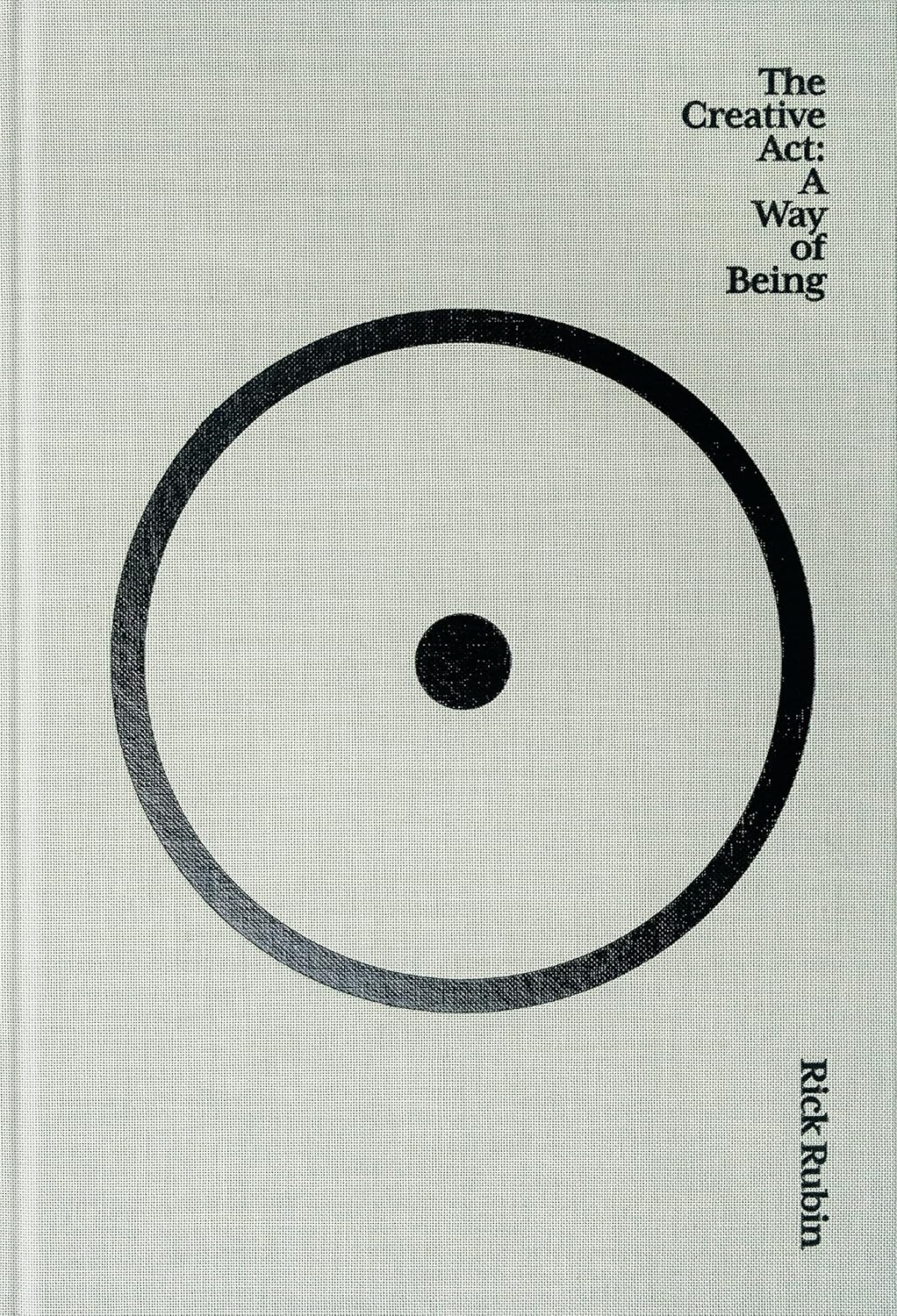
Looking for an honest The Creative Act: A Way of Being book review? Discover if Rick Rubin’s philosophy on creativity is actually worth reading. We dive deep into the themes, writing style, and whether this book is a summary of genius or just abstract fluff. Is The Creative Act: A Way of Being worth reading for you? Read our full 2026 update to find out.
Why Everyone Is Talking About Rick Rubin’s New Book
If you spend any time in creative circles or scrolling through productivity Twitter, you’ve likely seen the minimalist white cover with a simple grey circle. It belongs to The Creative Act: A Way of Being. But with so many “how-to” guides on creativity already flooding the market, the big question is: Is The Creative Act: A Way of Being book review actually worth your time, or is it just high-level fluff?
Rick Rubin is a legend in the music industry, known for helping everyone from LL Cool J to Johnny Cash find their “truth.” When a guy with that resume writes a book about the creative process, people listen. However, this isn’t a memoir about the recording studio. It’s something much more ethereal. After spending a few days sitting with this text, I’ve found that it’s less of a manual and more of a philosophy. In this The Creative Act: A Way of Being book review, we’re going to peel back the layers of Rubin’s wisdom to see if it actually offers a practical path for the modern creator.
What This Book Is Actually About (Without Spoilers)
At its core, The Creative Act argues that creativity is not a job or a specific output—it’s a relationship with the world. Rubin suggests that we are all “tuning forks” for the universe. The central framework isn’t about how to write a hit song; it’s about how to live in a state of constant receptivity.
The book is structured into 78 short “areas of thought.” It covers the journey from the first spark of an idea to the final release of a project. What’s interesting here is that Rubin doesn’t distinguish between a professional artist and someone just living their life. He treats every decision—how you decorate your room, how you listen to a friend—as a creative act. It’s a bold claim, and while reading, what stood out to me was how much he emphasizes detachment from the outcome. If you’re looking for a book that tells you how to make a million dollars from your art, you might be disappointed. But if you want to know how to stop being afraid of the blank page, this is where the book shines.
The Feel of the Pages: Writing Style and Rubin’s Voice
Reading this book feels like sitting across from a very calm, very wise mentor who refuses to give you a straight answer. Rubin’s voice is minimalist. The sentences are often short and meditative. There is a rhythmic quality to the prose that forces you to slow down. You can’t really “speed read” this book; if you do, the ideas just slip through your fingers like sand.
It’s worth pausing here to mention that the tone is quite “Zen.” For some, this will be deeply soothing. For others, it might feel a bit too abstract. There are moments where the language borders on the mystical, which is a departure from the gritty, technical advice found in books like The War of Art. In my view, the readability is high because of the short chapters, making it a perfect “bedside table” book where you read one entry every morning or night to set your headspace.
Exploring the Depths: Themes and Emotional Impact
The primary theme is the “Source.” Rubin posits that ideas exist outside of us, and our only job is to be open enough to catch them. This shifts the burden of “genius” away from the individual, which can be a massive relief for anyone suffering from burnout or imposter syndrome.
Another major thread is the idea of “Sublime Competence”—the point where you’ve practiced enough that you can finally forget the rules. You start to notice this fairly early on: Rubin is obsessed with the idea of the “beginner’s mind.” He wants us to unlearn the “right” way of doing things to find the “true” way. It’s an intellectual challenge that stays with you long after you close the cover. Personally, I felt a sense of calm while reading, but also a slight frustration at the lack of concrete “steps.” Still, the emotional weight of his encouragement is undeniable.
Why You Might Love It: The Strengths
- A Shift in Perspective: It successfully rebrands creativity from a “struggle” to a “practice of living.”
- Low Barrier to Entry: You don’t need to be an “artist” to get value from it. The advice applies to entrepreneurs, parents, and hobbyists alike.
- Format Flexibility: The short, punchy chapters make it incredibly easy to consume in small doses without losing the thread.
- Beautiful Aesthetic: From the physical feel of the book to the layout of the text, it is a piece of art in itself.
- Timeless Wisdom: It avoids trendy buzzwords, focusing instead on perennial truths about human nature and expression.
A Few Honest Critiques: The Weaknesses
This may not work for everyone. One realistic critique is that the book can feel repetitive. Because it is a collection of meditations, certain ideas about “letting go” and “listening” appear in various forms throughout. If you are someone who craves a data-driven approach or a “10-step plan for success,” you might find the lack of structure annoying. At certain points, it feels like the book is circling the same drain, trying to describe something that is ultimately indescribable. It’s a bit “airy-fairy” for the pragmatists among us.
How It Stacks Up: Comparison With Similar Books
When people look for a The Creative Act: A Way of Being review, they often compare it to Steven Pressfield’s The War of Art or Julia Cameron’s The Artist’s Way.
Pressfield’s work is like a drill sergeant—it’s about overcoming “Resistance” and doing the work. Cameron’s work is like a workbook, full of exercises like Morning Pages. Rubin’s book is the third pillar: it’s the philosophy. It doesn’t give you the “how” as much as the “why” and the “where from.” It stands out because it is less about the work of art and more about the spirit of the artist. If The War of Art is the “tough love” version of creativity, The Creative Act is the “unconditional love” version.
Is This For You? Who Should Read (and Who Shouldn’t)
You should read this book if:
- You feel stuck or “blocked” in your current work.
- You struggle with perfectionism and the “need” to be successful.
- You enjoy philosophy, meditation, or Eastern thought.
- You want a book that encourages you to slow down and notice the world.
You should skip this book if:
- You are looking for a biography of Rick Rubin’s time with Jay-Z or Slayer.
- You want a technical guide on how to produce music or write novels.
- You have a low tolerance for “spiritual” or abstract language.
The Creative Act: A Way of Being Book Review FAQ
1. Is The Creative Act: A Way of Being worth reading for non-artists?
Absolutely. One of the central points of this The Creative Act: A Way of Being review is that Rubin defines creativity as a way of moving through the world. Whether you’re a coder, a teacher, or a business owner, the insights on problem-solving and receptivity are universal.
2. Is there a lot of music industry gossip in the book?
No. If you’re looking for behind-the-scenes stories about famous musicians, you won’t find them here. Rubin intentionally keeps the focus on the abstract principles of creativity rather than his own celebrity encounters.
3. How long does it take to read?
While it’s over 400 pages, the word count is relatively low due to the minimalist layout and short chapters. You could read it in a few hours, but it’s designed to be digested slowly over weeks or months.
4. Does the book offer practical exercises?
Not in the traditional sense. It doesn’t have “homework” like The Artist’s Way. However, it does offer “experiments”—suggestions on how to change your perspective or try a new approach to a problem.
5. What is the main takeaway of the book?
The main idea is that the work of the artist is to be a dedicated listener to the world and to share what they hear without judgment or fear of the outcome.
Overall Verdict & Rating
In the end, this book is a rare find. It manages to be both profoundly deep and incredibly simple. While some readers may experience the abstract nature of the text as a bit frustrating, the cumulative effect of Rubin’s words is one of permission. He gives you permission to play, to fail, and to simply be.
Some might call it a bit self-indulgent, but I believe it provides a necessary counterbalance to our modern “hustle culture.” It’s a book that asks you to stop trying so hard and start paying more attention.
My Rating: 8.5/10
Reasoning: It loses a point for occasional repetitiveness and a lack of practical structure for those who need a nudge, but it gains massive points for its ability to change the reader’s fundamental relationship with their own mind.
Final Recommendation
If you’re looking for a companion to guide you through a long-term creative project, or if you simply feel like the “color” has gone out of your daily routine, this book could be a solid choice. It isn’t a magic wand, but it’s a very high-quality mirror that helps you see your own potential more clearly. You can find The Creative Act: A Way of Being at most major retailers, and it makes for a fantastic gift for the “thinker” in your life.
“Enjoyed this review? Discover more in our Philosophy Reviews section.”


