
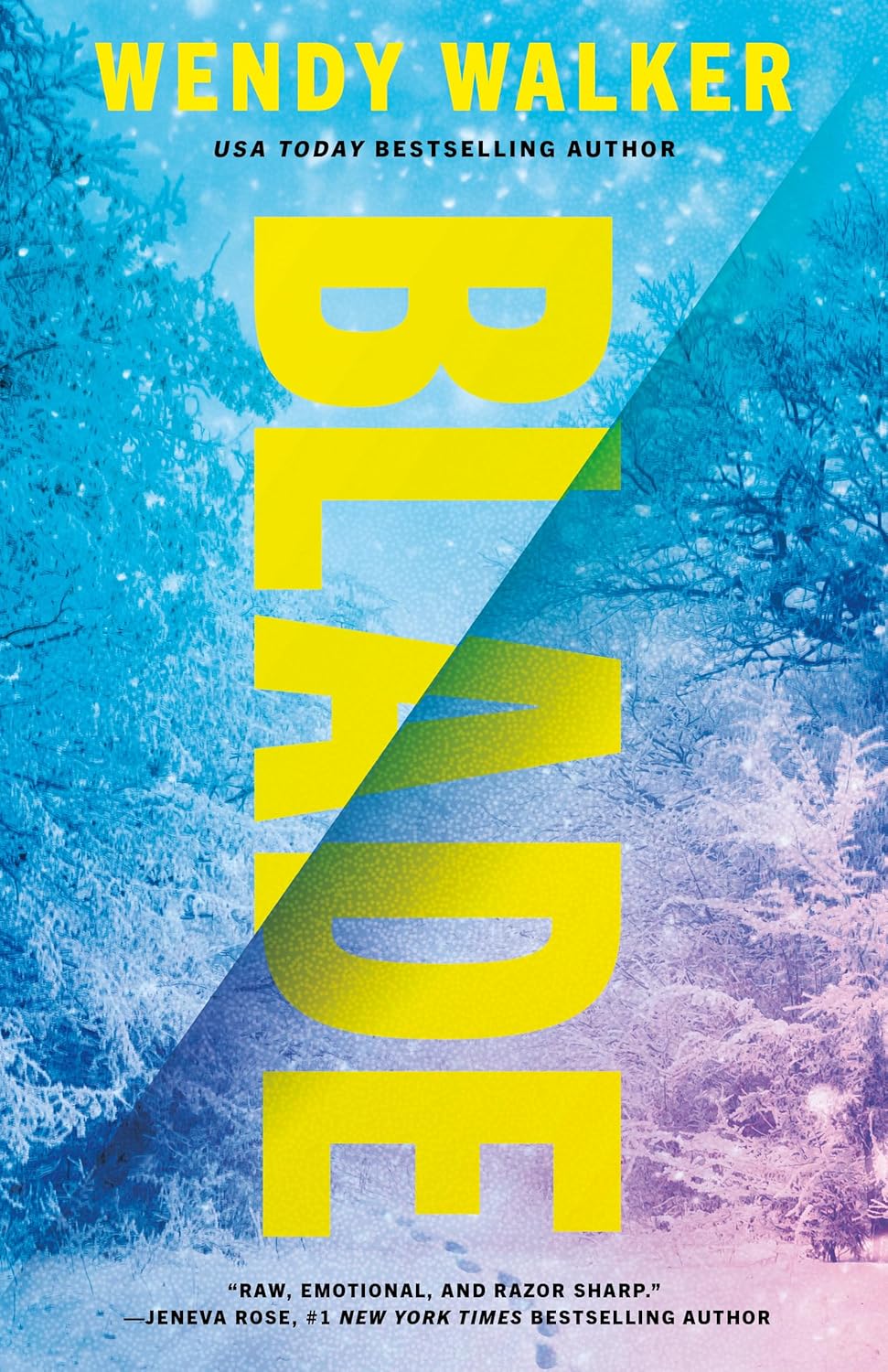
I’ve reached a point where I approach psychological thrillers with a healthy dose of skepticism. You know the feeling—you pick up a book with a sharp, one-word title and a dark cover, and you prepare yourself for the inevitable “big twist” that you’ll probably see coming by page fifty. It’s a fatigue born from years of reading “unreliable narrators” who all seem to shop at the same trope-filled grocery store. So, when I first saw the listing for Wendy Walker’s The Blade, I had that familiar hesitation. Walker has a reputation for being clinical and precise with her suspense, but I wondered if this new one would just be another entry in the “suburban secrets” catalog, filled with the usual cocktail of hidden wine bottles and neighborhood gossip.
After spending some time with the premise and the world Walker is building here, I realized my initial doubt was a bit unfair. There is something about the way she handles tension that feels less like a cheap jump-scare and more like a slow, steady tightening of a knot. It’s not about the sudden “gotcha” moment; it’s about the creeping realization that the knot was tied around your neck while you weren’t looking.
The Texture of the Tension
What struck me first about The Blade isn’t necessarily the plot itself, but the sheer weight of the atmosphere. If you’ve read Walker before, you know she doesn’t do “light and airy.” This story feels heavy from the jump, thick with a sort of humid dread that clings to the characters. It’s grounded in a specific kind of psychological pressure that isn’t just about what happened, but about what might happen if the truth slips out. Every conversation feels like it’s happening on a frozen lake where the ice is just a few millimeters too thin.
What felt unusual to me—and frankly, what I found most refreshing—is that the book doesn’t seem to rely on a frantic, breathless pace to keep you invested. Instead, it leans into the discomfort of the characters’ internal lives. It’s a book that asks you to sit in a room with people who are all keeping secrets from each other and just watch the sweat start to bead on their foreheads. Walker excels at describing the physical symptoms of anxiety—the shallow breathing, the forced smiles, the way a character might grip a glass just a bit too tight. It’s a deliberate, almost surgical approach to storytelling that values the “why” just as much as the “what.”
Why This Isn’t Just “Another Thriller”
We see a lot of books that try to mimic the “Grip-lit” formula, but The Blade feels like it’s operating on a different frequency. While many authors in this genre focus on the action of the crime—the blood, the chase, the physical danger—Walker seems much more interested in the aftermath of the trauma. She’s looking at the scar tissue, not just the wound.
What surprised me was the focus on the sharp edges of memory. The title isn’t just a physical reference; it feels like a metaphor for how the past can cut into the present. There’s a specific sharpness to the prose here that matches the title perfectly. It’s not flowery. It’s not trying to be poetic for the sake of it. It’s cold, it’s efficient, and it’s effective. Think of it as the difference between a blunt instrument and a scalpel; Walker doesn’t need to swing hard to draw blood.
I’ve seen some early chatter suggesting this is a “fast-paced page-turner,” but I actually want to challenge that common opinion. Calling it a “page-turner” almost cheapens what’s happening here. It’s more of a “page-lingerer.” It’s the kind of book where you finish a chapter and have to put it down for a second because the psychological implications of what you just read are actually quite disturbing. You find yourself re-reading sentences not because they were confusing, but because they were so quietly devastating. If you’re looking for a book to read while you’re distracted at the airport or lounging on a noisy beach, this might actually be too dense for that. It demands a certain level of emotional presence and silence from the reader to truly land its blows.
The Human Element: Characters or Caricatures?
In many thrillers, the characters are just chess pieces being moved around to get to the “big reveal”—they are functional but hollow. In The Blade, the characters feel like they have actual marrow in their bones. You might not necessarily like everyone you meet in these pages—and let’s be honest, Walker rarely writes “likable” characters in the traditional, fuzzy sense—but you will understand their desperation. You feel the weight of their bad choices and the suffocating reality of their circumstances.
There’s a sense of isolation that permeates the story, even in the middle of a crowd. Even when the characters are together, they feel worlds apart, separated by the invisible barriers of their own private shames. This creates a specific kind of loneliness that I haven’t seen executed this well in a thriller in quite some time. It reminds me a bit of the better works by Gillian Flynn, where the setting becomes a character in itself—not just a backdrop, but a claustrophobic cage that forces these flawed people to collide until something finally breaks.
Who Should Put This on Their Nightstand?
Is The Blade worth reading for everyone? Honestly, no. No book is, and trying to please everyone usually results in a story that says nothing at all.
This is for you if:
- You prefer psychological depth and character studies over high-speed car chases or high body counts.
- You enjoy stories where the “villain” isn’t clearly defined until the very end, or where the lines between victim and perpetrator are intentionally blurred.
- You like prose that is lean, mean, and somewhat clinical—writing that values precision over sentimentality.
- You are a fan of “unreliable perspective” but want it handled with more sophistication than the usual “I was too drunk to remember” tropes.
You might want to skip this if:
- You are looking for a feel-good ending or a story where justice is served in a neat little bow with all the “bad guys” in handcuffs.
- You struggle with themes of deep-seated trauma, gaslighting, or intense domestic tension that hits a bit too close to home.
- You prefer a linear, straightforward mystery that moves from Point A to Point B without spending much time inside the dark corners of the characters’ heads.
- You want a “cozy” mystery to read with a cup of tea—there is absolutely nothing cozy about this blade, and it will likely make your tea go cold.
My Subjective Hang-ups
I’ll be honest: there were moments where the intensity felt almost too controlled, almost too antiseptic. Sometimes I found myself wishing for a bit more messiness, a bit more human chaos to break through the rigid structure. Walker’s writing is so precise that it can occasionally feel a little detached, like she’s observing her characters through a microscope rather than living with them. It’s like watching a master surgeon perform a complicated procedure—you admire the skill and the lack of wasted movement, but you’re always aware that there’s a professional coldness to the environment.
What might not work for everyone is the way the secrets are layered. It’s a very dense architecture. If you aren’t paying close attention to the small shifts in tone or the subtle contradictions in dialogue, some of the nuances of the relationships might fly over your head. This isn’t a book you can skim while watching TV. If you miss a single sentence, you might miss the entire motivation for a character’s sudden shift in behavior two chapters later.
The Comparison Game
If I had to compare this to something else on the shelf, I’d say it sits somewhere between the domestic dread of Shari Lapena and the intellectual suspense of A.S.A. Harrison. It has the accessibility of a mainstream thriller but the “dark soul” of a more literary psychological study. It’s more sophisticated than your average beach read, which is either a major selling point or a fair warning, depending on whether you want to think or just be entertained this weekend.
Final Verdict: Is It a “Must-Read”?
I hate the term “must-read.” It’s overused, usually wrong, and feels like a marketing command rather than an honest recommendation. However, I will say this: The Blade is a significant entry in Wendy Walker’s career. It feels like she’s doubling down on the things she does best—dissecting the human psyche and showing us the jagged, ugly parts we usually try to hide behind closed doors.
It’s an uncomfortable read, but in a way that feels intentional and earned rather than exploitative. It doesn’t rely on gore or cheap shocks to get a reaction out of you; it doesn’t need to scream to be heard. It just places you in a situation where the air is thin and the exits are blocked, and then it waits with folded arms to see how you’ll react to the pressure.
If you want a book that will linger in the back of your mind long after you’ve closed the cover—not because of a flashy twist, but because of the uncomfortable questions it asks about truth, memory, and the cost of keeping silent—then yes, The Blade is absolutely worth your time. Just don’t expect to feel particularly relaxed or “light” when you’re finished.
Blade by Wendy Walker Amazon LINK
“Enjoyed this review? Discover more in our Mystery Reviews section.”


