
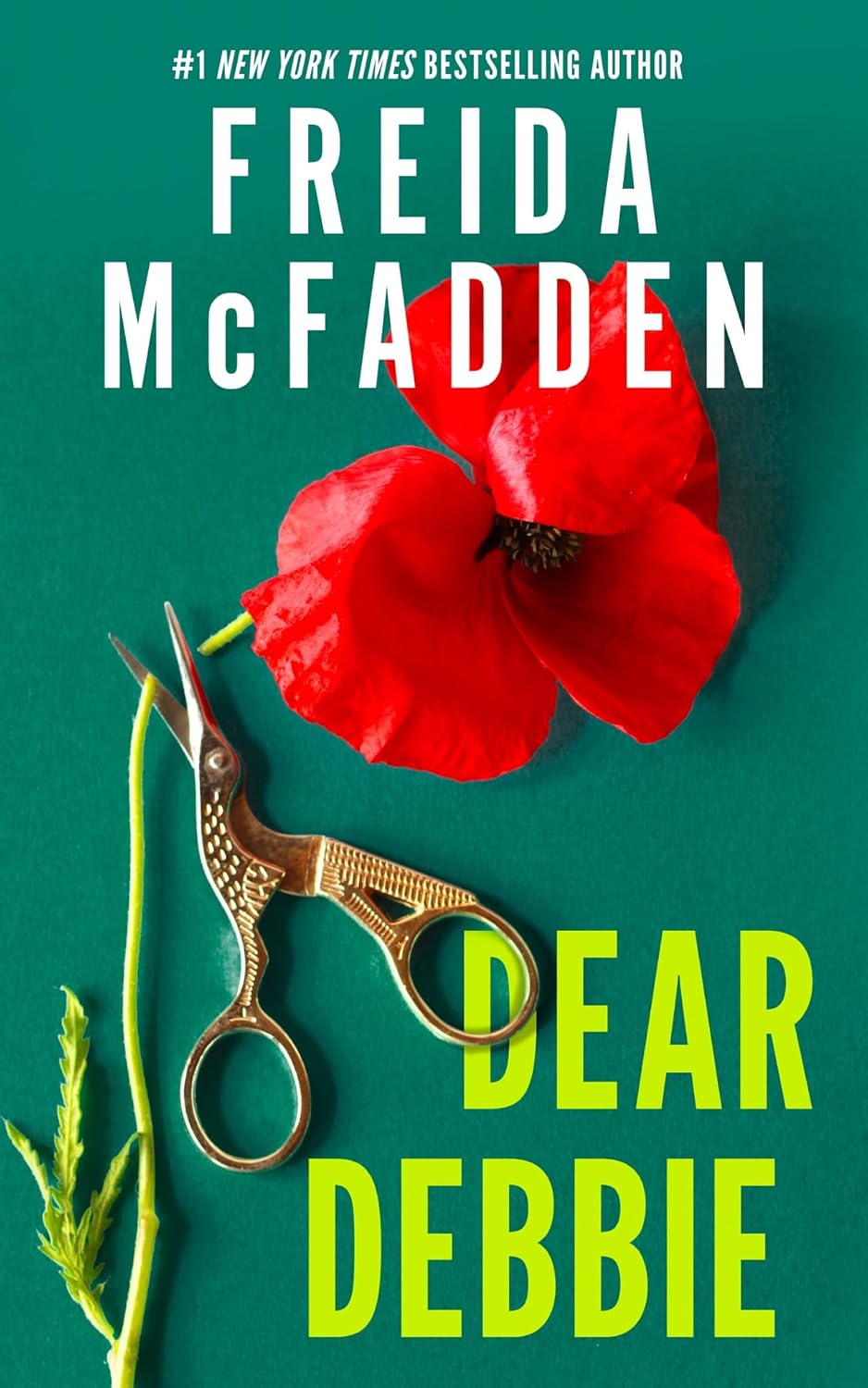
We’ve all been there. You see a name like Freida McFadden on a cover, and your brain immediately starts prepping for a sleepless night. There is a specific kind of gravity that comes with her releases; you know you’re going to get hit with a twist, but as a seasoned thriller reader, you start wondering: Can she actually catch me off guard this time?
When I first picked up this latest offering, I felt that familiar mix of excitement and high-bar skepticism. Dear Debbie isn’t just another drop in the psychological thriller ocean. It feels more personal, almost uncomfortably so. If you’re looking for a quick answer to whether this book is worth your time—yes, it is. But it’s not for the reasons you might think.
The Haunting Echoes of a Hidden Life
At its core, this story revolves around a set of letters—those “Dear Debbie” notes that feel like eavesdropping on a conversation you weren’t meant to hear. We follow a narrative that feels grounded in the mundane before it starts to rot at the edges.
Without giving away the game (because what’s the point of a thriller review with spoilers?), the book explores the thin line between childhood innocence and the baggage we carry into adulthood. It’s about secrets that aren’t just kept, but are actively vibrating under the floorboards. At certain points, it feels like the author is testing how much tension a reader can take before the snap.
While reading, what stood out to me was how the letters functioned as a secondary pulse for the book. They aren’t just plot devices; they are the emotional DNA of the entire mystery.
Why the Pacing Might Make You Sweat
Freida McFadden has a very specific “voice”—it’s punchy, accessible, and rarely wastes a sentence. In Dear Debbie, that voice feels a bit more refined, perhaps a little darker than her previous work. The pacing is relentless, which is great for a Sunday afternoon binge, but it does leave you breathless.
I’ll admit, I wasn’t fully convinced here—at least not at first. The early chapters lay a lot of groundwork that felt almost too “domestic,” but then the shift happens. It’s a subtle gear change that moves the story from a family drama into something much more sinister. For an experienced reader, the speed at which the plot moves is a double-edged sword. You want to savor the clues, but the prose is practically screaming at you to turn the page.
Is it high literature? No. Is it a masterclass in hook-driven storytelling? Absolutely.
The Heavy Weight of What’s Left Unsaid
There is a specific kind of lingering dread that this book cultivates. It’s not just about “who did it,” but rather “what was done to them.” The themes of trauma and the cycle of secrets are handled with a surprising amount of nuance.
Some readers may experience this differently, but for me, the intellectual impact came from the realization of how easily lives can be dismantled. This isn’t just a “fun” thriller; it has teeth. It makes you look at your own history and wonder what letters you might have hidden away. At this point, I had to stop and think about how much of our identity is shaped by the things we refuse to talk about.
Five Things This Book Gets Absolutely Right
- The Hook is Immediate: From the first mention of the letters, you are locked in. There’s no “hundred-page slog” here.
- Atmospheric Tension: The setting feels claustrophobic in the best way possible. You feel trapped alongside the characters.
- Relatable Vulnerability: The protagonist isn’t a superhero; she’s flawed and occasionally makes bad decisions, which makes her feel real.
- Structural Creativity: Using the “Dear Debbie” letters to bridge time periods is executed seamlessly.
- The “One More Chapter” Effect: It’s genuinely difficult to put down. McFadden knows exactly where to end a scene to keep you hovering.
Where the Road Might Get Bumpy for Some
This is where opinions may split. While the twists are a signature of the author, a very skeptical reader might find one or two of the late-game reveals to be a bit of a stretch.
I found myself questioning the logic of a specific character’s motivation toward the end. It wasn’t enough to ruin the experience, but it did make me pause. If you prefer your thrillers to be 100% grounded in cold, hard realism, there are moments here that require a bit of a “leap of faith.” However, within the universe McFadden has built, it mostly holds water.
Standing Tall in a Crowded Genre
How does this compare to the giants of the genre? If you enjoy the psychological depth of The Silent Patient but want the rapid-fire delivery of a popcorn thriller, this is your middle ground. It feels more modern and “online” than classic noir, but it retains that old-school sense of mystery.
In my view, Dear Debbie stands out because it doesn’t try to be anything other than a gripping mystery. It knows its lane and it drives at a hundred miles an hour. Some readers will love this. Others might not.
Is This Your Next Favorite Read?
This book is a goldmine for:
- Readers who love “found footage” or “found letter” tropes.
- Fans of domestic suspense who want a darker edge.
- Anyone who needs a “palate cleanser” book that moves quickly.
On the other hand, if you’re looking for a slow-burn, lyrical prose-heavy character study, this might feel a bit too fast for you. It’s a book for the “now,” designed to be consumed and discussed immediately.
Common Questions About the Dear Debbie Book Review
Is Dear Debbie worth reading if I’ve never read Freida McFadden? Actually, this might be one of the best places to start. It showcases her strengths—pacing and twists—without being too tied to her usual tropes.
How “dark” is the Dear Debbie review-wise? It deals with some heavy themes regarding family and secrets, so it’s darker than a “cozy mystery” but stays away from extreme graphic violence.
Does this book have a satisfying ending? Thrillers are notorious for “bad” endings, but this one wraps up the core mystery while leaving you with a final, chilling thought.
Is it a standalone or part of a series? It is a standalone, which is great for readers who don’t want to commit to a five-book arc.
What is the general Dear Debbie opinions among thriller fans? Most fans are calling it a “return to form,” praising the emotional stakes which feel higher than in some of her recent rapid-releases.
The Final Verdict
If I’m being honest, I went in expecting a standard thriller and came out feeling a bit more rattled than usual. Dear Debbie is a lean, mean, tension-filled machine. It has its moments of “thriller logic,” but the emotional core is so strong that you forgive the occasional narrative convenience.
My Rating: 8.5/10
It’s a high-octane mystery that respects the reader’s time while delivering a gut-punch of an ending. If you’ve been on the fence about whether the Dear Debbie book review buzz is justified, consider this your green light.
Ready to Uncover the Secrets?
If you’re ready to see what’s actually inside those letters, you can grab your copy and join the conversation. There’s something uniquely satisfying about being part of the “I know the twist” club.
[Check Price and Availability Here (AMAZON)]
“Enjoyed this review? Discover more in our Mystery Reviews and Freida McFadden reviews
section.”


