
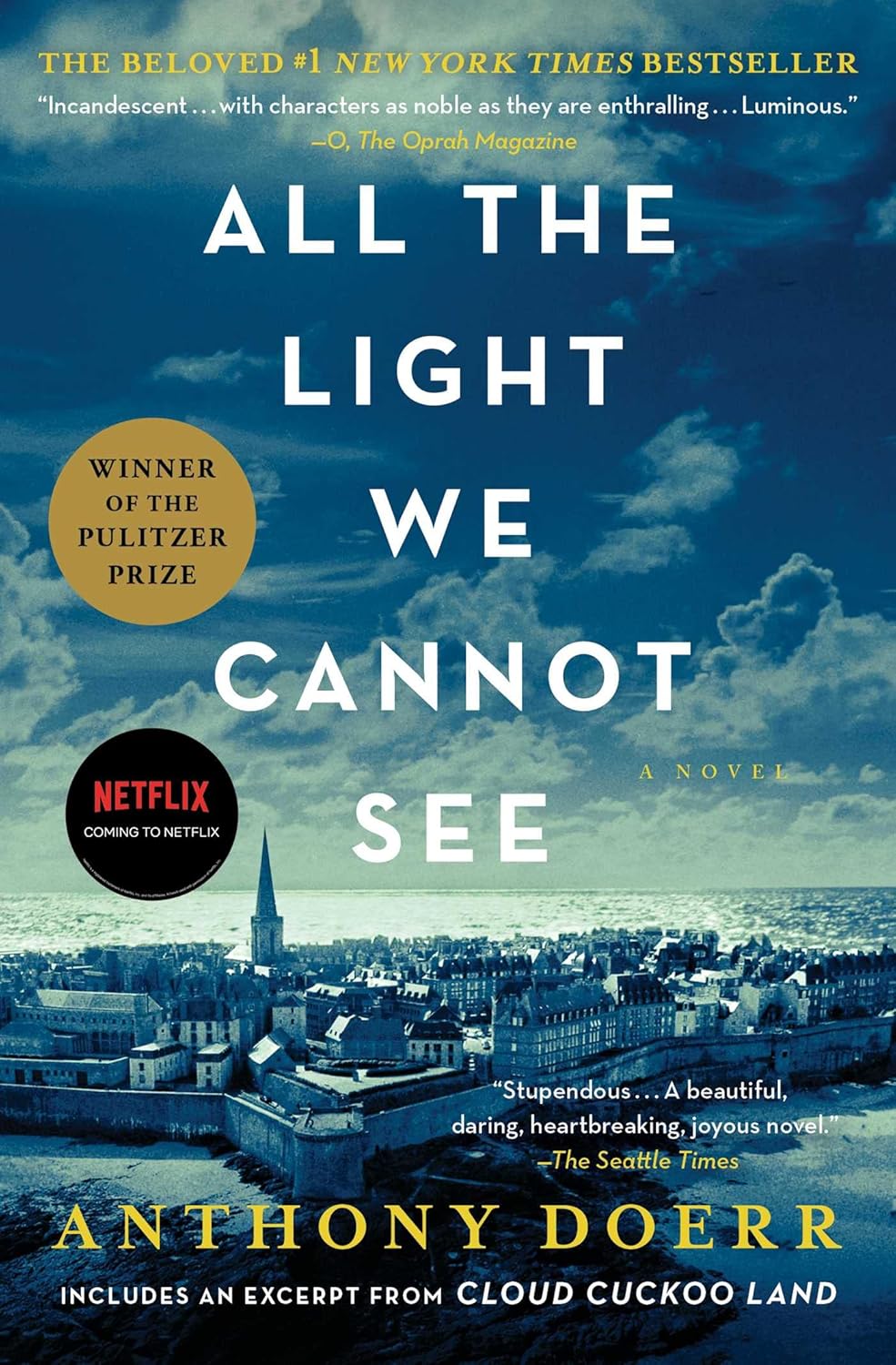
The literary world is often crowded with historical fiction, yet every few years, a story emerges that doesn’t just sit on the shelf—it breathes. Anthony Doerr’s Pulitzer Prize-winning novel, All the Light We Cannot See, has been that book for millions. But why does it continue to dominate “must-read” lists a decade after its release? Is All the Light We Cannot See worth reading, or is it just another beautifully packaged war story?
When I first picked this up, I wasn’t looking for a tactical breakdown of World War II. I was looking for a reason to feel something. In this All the Light We Cannot See book review, I want to move past the hype and look at the actual soul of the prose. This isn’t a book you read for the “what happens next”—it’s a book you read for the “how does it feel to be alive.”
The Haunting Beauty of Invisible Threads
The core of this narrative isn’t the Siege of Saint-Malo, though that serves as the explosive backdrop. Instead, the story follows two children whose lives are essentially mirrors reflecting different kinds of darkness. Marie-Laure is a blind French girl who navigates the world through touch, smell, and the intricate wooden models her father builds for her. Werner is a German orphan whose mechanical genius with radios becomes his ticket out of the coal mines and into the terrifying machinery of the Nazi regime.
What the book really does well is exploring the concept of “unseen” light—the radio waves that carry voices across borders, the hidden gems of human kindness, and the internal moral compasses that flicker in the dark. At certain points, it feels like the plot is almost secondary to the atmosphere. Doerr isn’t just telling a story; he’s painting a mural of two souls drifting toward an inevitable collision.
At this point, I had to stop and think about how rare it is for an author to treat a disability like blindness not as a “challenge to overcome,” but as a completely different, valid way of experiencing the richness of the world.
A Prose That Mimics the Pulse of a Radio
If you are a reader who appreciates the “crunch” of language, Doerr’s writing style will be your favorite part of the experience. The chapters are short—some only a page or two—which creates a rhythmic, almost staccato heartbeat. While reading, what stood out to me was the sheer density of the sensory details. You don’t just read about a seashell; you feel its ridges and smell the salt.
However, this may not work for everyone. If you prefer long, sweeping chapters with traditional “cliffhanger” endings, the fragmented structure might feel disjointed at first. It took me about fifty pages to really find the frequency, so to speak. Some readers will love this quick-fire immersion. Others might find it keeps them at arm’s length. For me, it felt like looking through a kaleidoscope—small, brilliant shards that eventually form a whole.
When the Weight of History Becomes Personal
In my view, the true impact of this book isn’t found in the grand movements of armies. It’s found in the small things: a can of peaches shared in a cellar, the hum of a forbidden broadcast, or the way a father’s love translates into a miniature city. Doerr manages to capture the intellectual weight of the era without making it feel like a history lecture.
There is a deep, lingering sense of melancholy here. You know, from the very first page, that war doesn’t have “winners” in the way we like to think. It leaves people fragmented. This book asks a very difficult question: Is it possible to remain “good” when the world around you has gone completely mad? I wasn’t fully convinced by every moral resolution in the book—at least not at first—but the questions themselves are what stay with you long after the final page.
Five Reasons This Story Stays Under Your Skin
- The Sensory Immersion: Because Marie-Laure is blind, the prose is forced to be more descriptive of sound and texture. It forces you to “see” with your ears and fingers.
- Werner’s Moral Conflict: Werner isn’t a villain, but he is part of a villainous system. Watching his internal light dim as he tries to survive is heartbreakingly realistic.
- The Puzzle Box Structure: The way the timelines weave together feels like the mechanical models Marie-Laure’s father creates. It’s intricate and satisfying when the pieces click.
- The Sea of Flames Mythos: The inclusion of a potentially cursed diamond adds a layer of “fable” to the gritty reality, giving the book a timeless, legendary feel.
- The Economy of Language: Doerr never wastes a word. Each sentence feels polished, like a stone found on a Saint-Malo beach.
Where the Narrative Might Lose You
I’ll be honest: there are moments where the pacing slows to a crawl. Because the book is so focused on internal states and atmosphere, the middle section can feel like it’s treading water. If you are a high-octane plot seeker, you might find yourself checking the page count.
This is where opinions may split. Some see the slow build as essential for the emotional payoff. Others might call it self-indulgent. In my All the Light We Cannot See review, I have to acknowledge that the “magic” of the diamond sub-plot occasionally feels a bit at odds with the stark realism of the war. It’s a delicate balance that mostly works, but a skeptic might find it a bit too “neat.”
How It Holds Up Against the Genre Giants
When you compare this to books like The Book Thief or The Nightingale, All the Light We Cannot See stands out for its technical precision. While The Nightingale leans more into the “heroic” aspect of the resistance, Doerr’s work is more concerned with the physics of the world—the science of radios, the biology of mollusks, and the architecture of cities. It feels more “intellectual” than its peers, yet it doesn’t lose the emotional core.
Is All the Light We Cannot See worth reading if you’ve already read a dozen WWII novels? Yes, primarily because it doesn’t feel like a WWII novel. It feels like a story about the human condition that just happens to take place in the 1940s.
Who Should Dive Into These Pages?
You will likely adore this book if you are the type of reader who underlines sentences and stops to stare out the window after a particularly beautiful paragraph. It’s for the “feelers”—those who want to be transported to a different time through the sheer power of atmosphere.
On the other hand, if you are looking for a fast-paced thriller or a strictly factual historical account, this might frustrate you. It requires patience. It requires a willingness to sit in the quiet moments between the bombs.
Frequently Asked Questions (FAQ)
Is All the Light We Cannot See worth reading for someone who doesn’t like war books? Absolutely. While the setting is World War II, the focus is on human connection, childhood, and the wonders of the natural world. The “war” is the storm, but the book is about the people trying to stay dry.
Does this All the Light We Cannot See book review contain spoilers? No, I have carefully avoided all major plot twists and ending details to ensure your reading experience remains fresh and impactful.
What is the “All the Light We Cannot See” summary in terms of age appropriateness? It is generally considered adult historical fiction but is very popular with young adults. It deals with the harsh realities of war but does so with a poetic grace that isn’t gratuitous.
Why is the book titled All the Light We Cannot See? The title refers to many things: the radio waves that allow us to hear voices from miles away, the “invisible” light of the electromagnetic spectrum, and the internal goodness in people that isn’t always visible on the surface.
How long does it take to get into the book? Because of the short chapters and dual perspectives, most readers find their “rhythm” by chapter 15 or 20. It starts fast but requires about an hour of focused reading to truly settle into Doerr’s unique voice.
Final Verdict: A Radiant Achievement
If I had to give this a score, it would be a 9.2/10.
The only reason it isn’t a perfect ten is that the “Sea of Flames” diamond plotline occasionally felt like it belonged in a different book. However, the emotional resonance of Marie-Laure and Werner’s separate yet converging paths is nothing short of a masterpiece. This isn’t just an All the Light We Cannot See review; it’s a recommendation to let yourself be changed by a story.
Some readers may experience this differently, but for me, the ending didn’t just wrap up the plot—it shattered the heart and then slowly mended it. It’s a rare book that makes you look at the world around you—the actual, physical world—with more curiosity and kindness.
Bring This Story Home
If you’re looking for your next “big” read—the kind of book that you’ll still be thinking about three weeks after you finish it—this is the one. It’s a beautiful addition to any physical bookshelf, but the audiobook is also exceptional due to the lyrical nature of the prose.
[Check the current price of All the Light We Cannot See here.]
“Enjoyed this review? Discover more in our History Reviews section.”


