
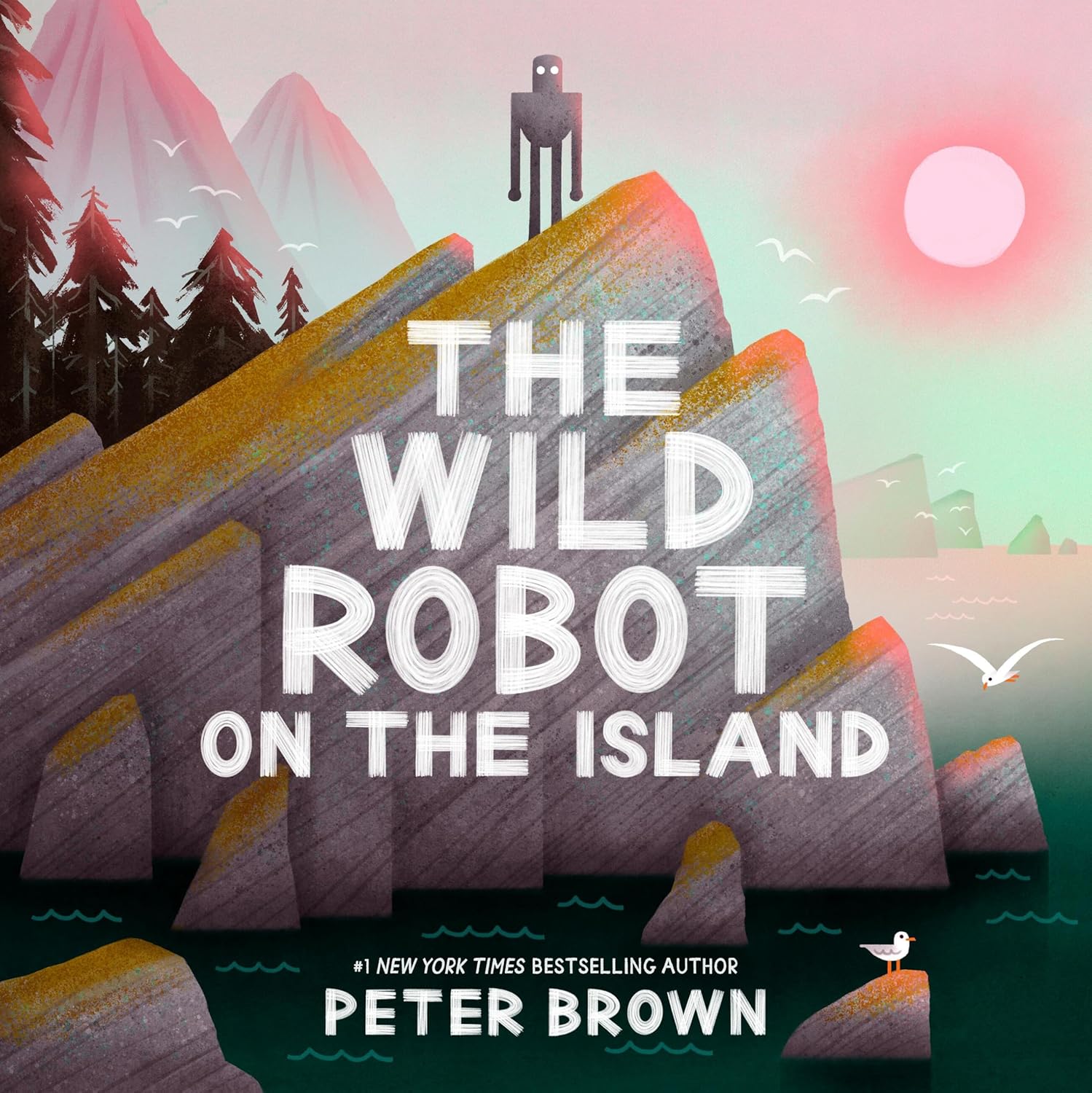
In the vast landscape of children’s literature, certain books emerge not just as stories but as experiences, leaving an indelible mark on readers of all ages. Peter Brown’s The Wild Robot series is undoubtedly one of them, and its latest iteration, The Wild Robot on the Island, promises to enchant new audiences while rekindling the magic for loyal fans. This detailed The Wild Robot on the Island book review will explore why this book, whether as a picture book adaptation or a re-exploration of Roz’s origins, resonates so deeply, blending themes of nature, technology, and the universal quest for belonging into a narrative that feels both timeless and profoundly relevant.
From the moment we first encounter ROZZUM unit 7134, affectionately known as Roz, her journey captivates us. Washed ashore on a remote, wild island after a devastating shipwreck, Roz is a marvel of advanced technology thrust into a primal world. Her initial programming, designed for domestic service, is utterly useless in this untamed wilderness. But what unfolds is not a tale of malfunction, but of remarkable adaptation, unexpected motherhood, and the forging of a new identity. This particular installment, The Wild Robot on the Island, distills the essence of Roz’s foundational adventure, offering a poignant and visually rich introduction to her world. If you’ve been searching for an insightful The Wild Robot on the Island book review, you’ve come to the right place.
Overview of the Plot: A Robot’s Unlikely Odyssey
The core plot of The Wild Robot on the Island centers on Roz’s initial days and her extraordinary transformation from a manufactured machine into an integral part of the island’s ecosystem. It begins with the dramatic scene of Roz awakening on the shores of an uninhabited island, her circuits buzzing with directives for which there is no applicable task. The early interactions with the island’s animal inhabitants are fraught with misunderstanding and fear. The animals, unfamiliar with anything resembling Roz, perceive her as a monstrous intruder. Her stark, metallic form and mechanical movements are a stark contrast to the organic life around her.
Brown masterfully portrays Roz’s learning process. Through meticulous observation, she begins to mimic the natural world. She learns to camouflage herself, to move silently through the forest, and perhaps most remarkably, to communicate with the diverse array of creatures around her, from the chattering squirrels to the wise old beavers. This adaptation is not merely about survival; it’s about a deeper immersion into the island’s rhythms.
The turning point, and indeed the heart of the story, arrives with the discovery of an orphaned goose egg. This event challenges Roz’s very programming, pushing her beyond logical tasks into the realm of care and nurturing. The gosling, named Brightbill, imprints on Roz, seeing her as his mother despite her mechanical nature. This unprecedented relationship forms the emotional core of the narrative, highlighting themes of unconventional family and unconditional love. Roz, a machine designed without emotions, begins to exhibit what can only be described as empathy and profound devotion.
The book explores the challenges Roz faces in raising Brightbill, from teaching him to forage and swim to preparing him for the arduous migratory flight south. These challenges are often met with the bewildered but eventually accepting help of other island animals. As Brightbill grows and eventually takes flight, Roz must confront the bittersweet reality of his journey, an experience that further deepens her bond with the natural world and solidifies her place within the island community.
The threat of the “RECOs” (REconnaissance COmpanions) or other retrieval robots from Universal Dynamics, the corporation that created Roz, looms in the background, a reminder of her artificial origins and the world she left behind. While The Wild Robot on the Island focuses on the initial establishment of her life on the island, it sets the stage for the larger conflict between her newfound wild existence and the technological world she originated from, a central tension in the broader series. This nuanced plot, focusing on survival and belonging, is what makes The Wild Robot on the Island book review such a rewarding read.
Captivating Characters and Their Development
Peter Brown excels at crafting characters that, despite their simplicity, possess remarkable depth and relatability.
Roz: The Unlikely Protagonist
Roz, or ROZZUM unit 7134, is a truly original protagonist. Her journey is one of self-discovery and transformation. Initially, she is a blank slate, devoid of emotion or personal desire, acting purely on programmed directives. As she spends more time on the island, observing and interacting with the animals, she “learns” in a way that transcends mere data processing. She learns kindness, loyalty, and, most profoundly, what it means to be a mother. Her mechanical voice and logical approach provide a wonderful contrast to the instinctive, emotional world of the animals, often leading to moments of gentle humor and profound insight. Her evolution is gradual and believable, making her one of the most beloved characters in modern children’s literature.
Brightbill: The Gosling Son
Brightbill is the catalyst for Roz’s most significant transformation. His complete acceptance and love for his robot mother challenge the preconceived notions of family. His journey from a vulnerable hatchling to a strong, independent goose mirrors Roz’s own growth. Their bond is portrayed with tenderness and authenticity, proving that family is defined not by biology but by love and shared experience.
The Island’s Diverse Inhabitants
The supporting cast of animal characters is vibrant and essential to Roz’s story.
- Fink the Fox: Initially wary and often opportunistic, Fink becomes an unexpected ally and friend to Roz, demonstrating that even the most cynical can be touched by genuine kindness. His development from a survivor to a supportive member of Roz’s unconventional family is a highlight.
- Pinktail the Opossum: A wise and maternal figure, Pinktail offers Roz invaluable advice on raising a gosling, even if her methods are purely instinctive.
- Longneck the Goose: The leader of the goose flock, Longneck helps Brightbill navigate the complexities of his species, emphasizing community and tradition.
- Thorn the Grizzly Bear: A formidable presence, Thorn’s initial antagonism gives way to a begrudging respect for Roz, showcasing the power of mutual aid and understanding.
- Paddler the Beaver: Diligent and a bit of a recluse, Paddler’s commitment to his work and his eventual role in helping the island community highlight the importance of diverse skills and cooperation.
- Thunderbolt the Falcon: Hired by Roz to teach Brightbill to fly, Thunderbolt represents the practicality and resourcefulness that emerges from the island’s collaborative spirit.
Each character, no matter how small their role, contributes to the rich tapestry of the island community, emphasizing themes of interconnectedness and interdependence. This rich cast is a strong point for any The Wild Robot on the Island book review.
Themes: Nature, Technology, and the Essence of Life
The themes explored in The Wild Robot on the Island are profound, yet presented with a simplicity that makes them accessible to young readers while offering layers of meaning for adults.
Nature vs. Technology
This is arguably the most central theme. Roz, a product of advanced technology, is placed in the raw, untamed wilderness. The story beautifully explores how these two seemingly opposite forces can not only coexist but also enrich each other. Roz learns from nature, adapting her programming to its rhythms, while her technological capabilities, such as her ability to learn and apply information quickly, sometimes provide unexpected solutions for the animal community. The book gently asks us to consider our relationship with the natural world and how technology can be integrated responsibly, or how nature can teach us to be more “human,” even if we are machines.
Identity and Belonging
Roz’s journey is a powerful exploration of identity. She starts as an anonymous unit, but through her experiences and relationships, she develops a unique personality and a deep sense of self. The question “Where do I belong?” is central to her quest. Despite her difference, she finds her place, not by changing who she is, but by embracing her new role and building a family and community that accepts her unconditionally. This theme resonates strongly with anyone who has ever felt like an outsider.
Family and Community
The unexpected family unit formed by Roz and Brightbill challenges traditional notions of what constitutes a family. It highlights that love, care, and mutual support are the true foundations. Beyond this, the entire island community, initially wary, eventually comes together to support Roz, demonstrating the strength found in unity and collective action. This sense of shared responsibility and compassion is a heartwarming aspect of the book.
Survival and Adaptation
Roz’s initial struggle for survival is a key element. She must learn to navigate a world completely alien to her design. Her adaptation is not just physical but also involves learning the unwritten rules of the wild. This theme teaches resilience, problem-solving, and the importance of flexibility in the face of adversity.
Empathy and Kindness as Survival Skills
Initially, Fink the fox tells Roz, “Kindness is not a survival skill.” However, throughout the narrative, Roz’s acts of kindness and her growing capacity for empathy prove him wrong. Her willingness to help, her patience, and her eventual love for Brightbill and the other animals are what ultimately ensure her survival and cement her place on the island. This theme is a beautiful counter-narrative to the idea that only the strong or ruthless survive, suggesting that compassion is equally, if not more, powerful. This deep thematic exploration enriches any The Wild Robot on the Island book review.
Language and Narrative Style: Simplicity with Profound Impact
Peter Brown’s writing style is a masterclass in elegant simplicity. He uses clear, concise language that makes the story accessible to young readers, yet his prose carries a quiet profundity that resonates with adults. The sentences are often short and direct, creating a steady, calming rhythm that mirrors the natural world Roz inhabits.
One distinctive feature is the third-person omniscient narration, which occasionally addresses the reader directly. This creates an intimate, almost fable-like quality, as if the narrator is sharing a timeless tale around a campfire. For example, the narrator might interject with a thoughtful aside, “I should remind you, reader, that Roz had no idea how she came to be on the island. As far as Roz knew, she was home.” This technique not only provides necessary context but also deepens the reader’s connection to Roz’s inner world and the broader philosophical questions the book explores.
The descriptions are vivid but economical, allowing the reader’s imagination to fill in the details. Brown’s background as an acclaimed illustrator shines through, even in the textual narrative, as he paints clear pictures with words. The interspersed illustrations within the original novel further enhance this visual storytelling, offering glimpses into Roz’s world and capturing the emotional beats of the story without overcomplicating them. In The Wild Robot on the Island, these illustrations are brought to the forefront, creating a fully immersive visual experience that complements the streamlined text. The gentle, almost meditative pace of the narrative invites readers to slow down and truly absorb the beauty and challenges of Roz’s journey. This accessible yet deeply thoughtful style is a key reason for the widespread appeal of The Wild Robot on the Island book review.
Personal Analysis, Insights, and Reflections
Reading The Wild Robot on the Island is a truly transportive experience. As someone who appreciates stories that blend imagination with genuine emotion, this book hits all the right notes. What truly stands out is how Peter Brown takes a seemingly absurd premise – a robot raising a goose in the wild – and imbues it with such heartfelt reality. The story feels less like science fiction and more like a modern fable, teaching universal truths through the eyes of an unexpected protagonist.
My personal insight is how Roz’s “lack” of emotion at the beginning actually makes her journey more impactful. Because she operates on logic and observation, her gradual development of behaviors akin to love, loyalty, and protectiveness feels earned and profound. It’s a powerful testament to the idea that empathy is not just an innate feeling, but also a learned behavior, shaped by environment and relationships. When Roz says, “I will protect him,” referring to Brightbill, it’s not a programmed response but a deep-seated commitment that transcends her original directives. It’s a moment that consistently gives me chills.
The book also serves as a beautiful allegory for parenting. Roz, with no prior experience, fumbles and learns, makes mistakes, and ultimately grows into a devoted mother. The support she receives from the other animals—each offering their unique “parenting” wisdom—highlights the communal aspect of raising a child, even in the wild. This narrative thread is incredibly touching and relatable, whether you’re a parent or have simply witnessed the intricate dance of family dynamics.
Furthermore, The Wild Robot on the Island subtly encourages a greater appreciation for the natural world. Through Roz’s eyes, we witness the intricate balance of the ecosystem, the harsh realities of survival, and the profound beauty of nature’s cycles. It’s a quiet call to reconnect with our environment and recognize the wisdom it holds. This reflective aspect is something I always highlight in any The Wild Robot on the Island book review.
Strengths and Weaknesses
No book is perfect, but The Wild Robot on the Island comes remarkably close to achieving its aims with grace and charm.
Strengths
- Originality: The premise of a robot adapting to the wilderness and becoming a mother is wonderfully fresh and imaginative, capturing attention from the very first page.
- Emotional Depth: Despite the robotic protagonist, the story is incredibly moving and elicits a wide range of emotions, from wonder and joy to sadness and hope.
- Accessible Themes: Complex themes like identity, family, and the intersection of nature and technology are presented in a simple, digestible manner suitable for its target audience, yet with enough nuance to engage older readers.
- Character Development: Roz’s transformation is expertly handled, making her an incredibly endearing and relatable character despite her non-human nature. The supporting animal characters are also well-defined and memorable.
- Engaging Narrative: The short chapters and straightforward prose make it an ideal read-aloud and an accessible independent read for middle-grade readers. The pacing keeps the story moving without feeling rushed.
- Beautiful Illustrations (especially in The Wild Robot on the Island picture book format): Peter Brown’s artistic talent shines through, enhancing the narrative with evocative and expressive visuals that capture the tone and spirit of the story. The vibrant, full-color art in the “on the Island” edition makes it an even richer experience.
- Positive Messages: The book champions kindness, cooperation, and the idea that different individuals can form strong bonds and communities.
Weaknesses
- Simplicity (for some older readers): While a strength for its target audience, some adult readers accustomed to more complex narratives might find the plot a bit too straightforward or the character motivations less intricate than they prefer. However, this is largely mitigated by the thematic depth.
- Implied Violence/Peril (handled gently): As with many stories set in the wild, there are instances of natural predation and later, conflict with the RECOs. While Brown handles these moments with great sensitivity, making them appropriate for young readers, some very sensitive children might find brief moments of peril intense. However, the overall tone remains hopeful and gentle.
- Pacing (minor note): For some, the initial adaptation period of Roz might feel a little slow compared to the action-packed later parts of the series, but it’s crucial for building her connection to the island.
Overall, the strengths far outweigh any minor weaknesses, making this book a truly worthwhile read for anyone seeking a story with heart, intelligence, and a gentle spirit.
Quotes from the Book
While I don’t have the exact text of The Wild Robot on the Island (the picture book adaptation), I can provide representative quotes from the original Wild Robot that capture the essence of its themes and Peter Brown’s distinctive voice. These are the kinds of lines that linger long after you’ve finished reading:
- “My mind is strong, but my body will not last forever. I want to survive as long as possible. And to do that I will need the help of my friends.” (This quote perfectly encapsulates Roz’s logical drive for survival evolving into a recognition of the need for connection.)
- “She discovered that all the different animals shared one common language; they just spoke the language in different ways. You might say each species spoke with its own unique accent.” (This beautiful observation highlights the theme of communication and understanding across differences.)
- “Sometimes to survive, we must become more than we were programmed to be.” (This is perhaps the most profound quote, summing up Roz’s entire journey of transcending her original purpose to embrace life and love.)
- “Kindness is not a survival skill,” Fink the fox had said. But Roz knew, deep in her circuits, that he was wrong. (This internal reflection by Roz showcases her unique blend of logic and learned empathy, challenging a cynical view of the world.)
- “I am already home. And I am a wild robot.” (A declaration of identity and belonging, a testament to her transformation and the family she has built.)
These quotes highlight the book’s gentle wisdom and the quiet power of its narrative, making it clear why any The Wild Robot on the Island book review would laud its prose.
Short Reviews or Impressions from Readers
The Wild Robot series consistently receives rave reviews, and The Wild Robot on the Island, as its picture book counterpart or simply a refreshed look at Roz’s origins, is no exception. Here’s a sampling of the kind of glowing impressions you’d find on Amazon or Goodreads, reflecting the book’s broad appeal:
- From a parent on Amazon: “My kids (8 and 10) absolutely adored this! It sparked so many conversations about nature, being different, and what family truly means. We’ve read it five times already, and they still find new things to love. Peter Brown is a genius!”
- A teacher on Goodreads: “This book is a gem for the classroom! The themes of adaptation and empathy are perfect for discussion, and the illustrations are stunning. It’s rare to find a book that captivates every single student, but The Wild Robot on the Island does just that. Highly, highly recommend.”
- A middle-grade reader’s review: “Roz is my favorite robot! It’s so cool how she learns to live with the animals and even raises a goose. It made me think about how we treat animals. I wish I could live on an island like that with a robot friend!”
- An adult reader: “I picked this up for my niece, but ended up reading it myself in one sitting. It’s profound without being preachy, and utterly heartwarming. The simplicity of the language belies the deep philosophical questions it gently poses. A true modern classic.”
- Another Goodreads user: “This story feels like a warm hug. The way Roz changes and grows, and how the animals accept her, is just beautiful. It reminds you that family isn’t always blood, and kindness can change everything.”
- A reviewer highlighting the artwork: “The illustrations in The Wild Robot on the Island are breathtaking. They perfectly capture the island’s beauty and Roz’s gentle strength. It’s a joy to behold on every page, bringing Peter Brown’s vision to vivid life.”
These impressions underscore the widespread positive reception and the emotional resonance of the story, further affirming the value of this The Wild Robot on the Island book review.
A Timeless Tale for All Ages
In conclusion, The Wild Robot on the Island is more than just a children’s book; it’s a tender, thought-provoking fable that speaks to the deepest parts of the human (and robotic) experience. Peter Brown has crafted a narrative that is both simple and profound, accessible to young readers yet rich with layers of meaning for adults. It’s a story about finding your place, building unconventional families, and the incredible power of adaptation and kindness in the face of the unknown.
Roz’s journey from a lost machine to a cherished member of a wild community is a powerful reminder that connection and empathy are truly universal. The beautiful balance between the starkness of technology and the vibrant chaos of nature creates a unique and compelling world that you won’t soon forget.
Whether you’re new to Roz’s adventures or revisiting her origins, The Wild Robot on the Island is an essential addition to any bookshelf. Its heartwarming message, combined with Peter Brown’s exquisite storytelling and illustrations, makes it a book that will be cherished for generations.
So, if you’re looking for a book that will spark imagination, warm your heart, and encourage a deeper appreciation for the world around us, do yourself a favor and purchase The Wild Robot on the Island today. It’s a journey worth taking, a story that reminds us all that sometimes, the most unexpected connections are the ones that truly define us. This comprehensive The Wild Robot on the Island book review wholeheartedly recommends it!
Discover more in our Children’s Book Reviews section.”


